How Biossil is Rescuing Billion-Dollar Drugs Big Pharma Abandoned | Anthony Mouchantaf
Watch the episode on
In this episode of Tank Talks, host Matt Cohen sits down with Anthony Mouchantaf, co-founder and CEO of Biossil, a biotech company on a mission to resurrect orphaned drugs using AI and a hedge fund–inspired operating model.
Anthony takes us through his unconventional journey: from a law school student obsessed with Alexander Hamilton, to founding his first startup, Rthm (acquired), to investing at OMERS and RBC, and finally returning to the founder seat with Biossil.
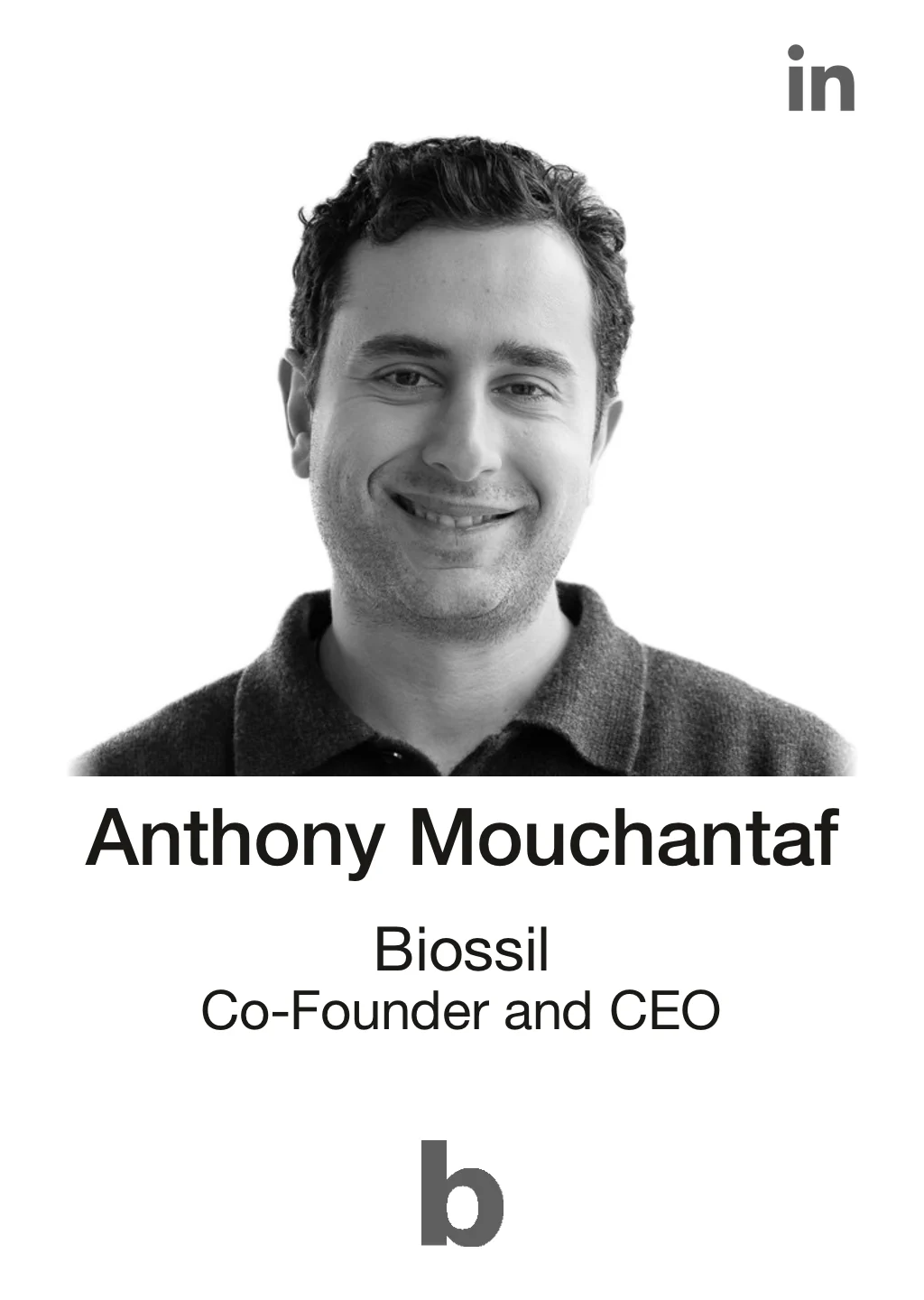
Anthony Mouchantaf, Co-founder and CEO, Biossil - Anthony Mouchantaf is the co-founder and CEO of Biossil, a biotech company that uses AI to systematically identify, acquire, and advance orphaned drugs left behind by failed clinical trials.
- With a background in law (U of T), startup founding (Rthm, acquired), and venture investing (OMERS, RBC), Anthony brings a rare blend of legal, financial, and operational discipline to the high-stakes world of drug development.
- Biossil is backed by Founders Fund and OpenAI, and is on a mission to turn industrial-scale drug resurrection into a new category of biotech innovation.
Episode Overview
From Law School to Startup Life
Growing up in Toronto as the child of immigrant parents, chasing constitutional law
The Alexander Hamilton obsession that started in high school
Teaching a course at U of T law without ever practicing
How a late-night conversation at Massey College with co-founder Alex led to Rthm
What Founding Rthm Taught Him About Himself
Getting comfortable with structural uncertainty as almost “a drug”
Why you can take the individual out of the startup, but never the startup out of the individual
The itch that never fully goes away after founding something
From Founder to Investor: OMERS and RBCX
What separates great investors from destructive ones
“Extremely hard to kill”: what he saw early in Matt and Ripple Ventures
Why most VCs cluster around mediocrity, and what the outliers do differently
The poker-chip analogy: how capital position shapes VC risk appetite
Why good LPs need to “thumb the scale” for good VCs, just as good VCs do for founders
The Idea Behind Biossil
Reuniting with Alex, an MD-PhD, after years on separate paths
The core problem: drug development should be recursive, but biotechs can’t afford to make it so
Why promising drugs get stranded in “regulatory limbo” when the data is equivocal, not failed
The insight: using technology to systematize what was historically a relationship-driven, human-scale rescue effort
Biossil 1.0 vs. the Bigger Vision
Launching in 2023 on a lean seed round with no capital to acquire drugs outright
Getting “too cute” trying to solve the problem at a fraction of the necessary cost
Why most VCs evaluate founders cross-sectionally instead of longitudinally
Hunting for Orphaned Drugs
Why data is a cost of admission in biotech, not a moat like in tech
How Biossil structures deals to share economics with original rights holders
Why inbound interest rarely meets their bar
Running Biossil Like an Operating Hedge Fund
Isolating alpha, or execution, from beta, or market and biotech cycle risk
Why traditional biotech investing is “binary risk you can’t underwrite” without a portfolio
Building resilience through catalyst density instead of just runway
The “epsilon” factor: surviving long enough for unexplained outcomes to work in your favor
Building Lean with AI
Running a hyper-efficient, eight-person core team
Why Biossil takes on regulatory and commercial risk, not manufacturing risk
The pipeline today: $70M raised, 11 drugs, 5 open clinical trials across the US, Canada, and Europe
What makes manufacturing the most underestimated cost in biotech
The Next 5-10 Years for Biossil
The long-term vision: an approved-drug pipeline, deeper trials, more disease areas
Bringing new mechanisms of action to market as a category-defining goal
Advice to His Past Self
Why he’s hesitant to just tell people to “go do entrepreneurship”
Motivation matters more than the identity of being a founder
The Steve Jobs commencement speech that reframed how he thinks about risk